Sunday, February 17, 2013

Tsaagan Sar sunrise


Greeting the new year
On the morning of Tsaagan, Mongolians climb to the peaks of the mountains and hilltops surrounding Ulaanbaatar and greet the New Year when the sun rises over the horizon. They raise their arms to the rising sun. Culturally it is frowned on for women to do this climb. There were a few women, very few, doing this Tsaagan Sar ritual. 

Friendly host at the top - notice the traditional shoes

Elder Stewart and a few missionaries made this climb on Tsaagan Sar. He took some phenomenal pictures.
Sunrise - notice the cluster of viewers on the lower peaks

We were recovering from our bout with pneumonia and didn't make the climb. Maybe next year I will join the festivities.
A group of LDS missionaries also greeting the sunrise
There were people who hauled wood to the top of the hills and mountains and made small fires to keep warm while they waited for sunrise. 
A Buddhist shrine on Tsaagan Sar
Buddhists also build shrines on tops of mountains as a focal point for rituals. On Tsaagan Sar, some worshipers leave food and cast milk on the shrine. 
Three Mongolians in their deels waiting for sunrise
From times of old, Mongols honor Mother Earth and Father Sky by giving thanks by casting small amounts of milk (Mother gives her gifts to the young) to the four corners of the sky.   
Raising their outstretched arms to the sun

Mongols believe that milk is pure as it is white and without blemish. They offer it as a blessing to God. When someone is going on a long journey, their mother will usually cast milk to the sky and pray for a safe trip, to keep them safe and to bring him or her back home safely.
A ger district at dawn
The same is is true for special occasions like weddings or other special times. That is why Mongolians call this holiday Tsaagan Sar (white month). 
Coal fires from the Ger Districts near Ulaanbaatar
The communists tried to ban Tsaagan Sar and replace it by renaming the holiday, "Collective Herder's Day". Rural Mongolians, nomads, would relish this holiday as a way of reuniting their families and making sure that cousins, aunts and uncles would meet at least once a year and get to know each other. It was also to show respect and honor their elderly. 

City residents, mostly under the watchful eye of the communists, would be punished if they took time off from work to travel and meet their relatives. The rural tradition continued to flourish under the guise of "Collective Herder's Day." After the 1990 Democratic Revolution in Mongolia, the new government reinstated Tsaagan Sar and it is Mongolia's number one holiday.  


A couple greeting the new year together - she was one of the very few women on the mountain


Tuesday, February 12, 2013

Missionary Talent Show

The choreography in this dance number was outstanding
During the Tsaagan Sar holiday, the mission scheduled a talent show for the missionaries. There is no missionary work during the 3 day national  holiday when families are visiting each other. The talent show the missionaries something to think about and do instead of getting homesick for their families. 
Some of the talent show participants
The missionaries loved it - planned for it, rehearsed for it, performed in it and enjoyed it thoroughly. What a memory of the incredibly talented group of missionaries we have here. There was comedy, skits, church songs, popular songs, and traditional songs and dance. There were a couple of senior missionaries who also contributed. 

They started the talent show off with a traditional Tsaagan Sar greeting for President and Sister Clark and all the senior couples.
The older persons hands are on top while the younger greeter hands are under showing support and respect for the elders
The missionaries and senior couples who had traditional Mongolian deels and jackets wore them. It was flashy and fun. 
Mongolians make their Tsaagan Sar visits dressed in traditional deels
Half of our appreciative audience
We were also treated with a video tape of the Sister missionaries in Choibalsan performing a traditional dance via videotape. 
Waiting for the show to start

The other half of our audience


Elders Robbins and Neuberger
Mongolian throat singers - an amazing skill and a thrilling, unreal musical experience
What great missionaries we have here. Here are pictures of the more photogenic numbers - interspersed with some vocals that were wonderful.
Elder Woodward standing tall for truth and justice 


Mongolian patriotic number


President Clark performing "I tat I thaw a pudditat"

Doing the twist

Sister Schiffler performing a solo. 


Senior skit - Sister Richardson about to collapse from thirst


Classical pianist 
Elder Naef and companion doing their thing

Traditional dance


This young Elder was in the hospital the day before the talent show - out of the hospital and on to the stage. 
 
Elder Naef in a traditional dance
Sister England, with Elder Stranski translating, recited a Robert Service rendition of the "Burial of Blasphemous Bill".

Elders Quinton and Lloyd doing a duet


Fandango - an unbelievable number 

Spelling out the "D" in LDS


Elder Neuberger had a little extra zest


Doing the wave - their rehearsing and performance paid off 


Elder Titensor reaching great heights.


The finale showed a choreographed "LDS"

Saturday, February 9, 2013

Getting ready for Tsaagan Sar

Milk products and sweets on sale for Tsaagan Sar
Engaged again. We were fully engaged teaching English this week but with fewer and fewer students as the week progressed as our students were either attending conferences or preparing for Tsaagan Sar. Preparing for Tsaagan Sar requires a lot of house cleaning, food and present shopping and food preparation, similar to our preparations for Christmas.   I took a back seat role to Darlene in the lessons but I still had my teaching segment. 

We are 80 percent back to normal but we are babying ourselves a little in terms of only doing necessary activities. 


Shopping. We did go shopping on Friday.  We hadn't done major shopping together since November. We found and bought two bottles of Pace Salsa this week - a real treasure. Our shopping trips last 2 1/2 hours and involve six different stores. Our driver, Baatar, carries our purchases out to his van as we check out of each store. Four couples usually make this trip so we end up with lots of groceries. Baatar keeps everything separate somehow. 
One table of game players after our Taco Salad feast

Senior couples pre-Tsaagan Sar get-together. The senior couples met for a Taco Salad potluck on Saturday night. We all miss Mexican food in Mongolia so we do our own.  We played games afterward. We enjoy these social times together. President and Sister Clark were out of town and couldn't join us. This was our first outing socially in over a month.  
Scrabble players - a new couple, the Englands joined us. He has a badge on and Sister England is in the blue sweater.
Tsagaan Sar or White Month is one of Mongolia's two major holidays. In 1206 at the founding of the country of Mongolia, Ghenghis Khan moved the fall harvest celebration to mark the end of winter and the beginning of spring. It was to celebrate new life such as fresh grass and baby animals being born. It coincides with the beginning of the Lunar New Year, occurring generally in late January or during February.
Darlene looking at Tsaagan Sar products on sale at Sky supermarket

It is also a time to have a new beginning, to reflect on the past and to make plans for the future. Mongolians prepare for the feasting of Tsagaan Sar many weeks in advance, buying and preparing food, cleaning and decorating their gers. Many Mongolian people will dress in deels (traditional Mongolian dress costumes) during Tsaagan Sar.
Last minute shoppers tasting holiday breads and sweets

To mark the festival, Mongolians purge their bodies and minds of all that is bad and start their lives afresh. They pay off old debts from the previous year.

Most of all, they gather together to express respect to their elders, relatives and friends, reconfirming their social bonds. Families gather together, to celebrate and eat traditional food such as buuz (meat dumplings), uuts (grilled sheep’s tail), Ul boov (pastry), yak’s milk and rice.

The celebration begins the night (Bituun) before the Lunar New Year with a lavish meal for the immediate family. Mongolians believe that if you begin the New Year with a full stomach, then good things will surely follow.
Mongolians tend to overspend for this holiday like we do for Christmas
The first day of Tsaagan Sar they will go to visit their closest family members, usually in order of age, offering the traditional Tsagaan Sar greeting. The second eldest member of the family will stand arms outstretched, palms upwards and covered by a khadag, (a piece of blue silk), then will grasp their elder’s elbows supportively, and then the two will touch their cheeks together. This continues until everybody has been greeted in order of age, and all gifts are exchanged.

The value of gifts is unimportant to the ceremony; consideration is the important factor. Traditionally older people are offered khadags and younger people sweets, according to custom strong drinks are only offered to the over 40’s.

People will sing songs and play games in their gers as they welcome and greet their guests.  Following greetings, more food is placed on the tables and the eating and drinking starts over.

During the second day of Tsagaan Sar, Mongolians will visit their friends’ houses, continuing the process of greetings, eating and drinking. On the third day they will gather together in their workplaces for more of the same. 

We will make visits next week and will show you Tsaagan Sar hospitality and greetings. 


The gers are mostly on hillsides making water transport difficult

Water hauling in the Ger Districts. Elder Stewart took these fascinating pictures of people hauling water in the Ger Districts. The lack of indoor plumbing is the greatest hardship people face in the Ger Districts. 
Everybody does their part


Sunday, February 3, 2013

The week ends on a high note


Linking the generations
English classes. I taught 3 classes of English this week by myself. Darlene helped with the lesson plans. Tuesday was a little ragged but by Wednesday and Thursday I was starting to enjoy myself. “I can do this!”


Recuperation goes on and on. On Friday I started to run a temperature again and we got some emergency antibiotic with the help of Dr. Stewart. The Senior couples brought food in all week.


The Briggs finish their mission. On Wednesday noon, we had a farewell noon luncheon to honor the Briggs who had completed their 1 ½ year mission, all in the city of Darkhan.

Time goes by quickly

They had a satisfying mission and were pleased at the development of the priesthood in the Darkhan District. Their replacements, the Millers, won’t arrive until early March. 

The Briggs will return to their home in Springville, Utah. Darlene couldn’t attend because of her health even though she had positive experiences with the Briggs during our trips to Darkhan. Sister Clark sent home a plate of leftovers.

Last year's senior trip
Senior trip planning. On Tuesday Jangar (last year’s tour guide) and myself finally put together a senior trip proposal for this year and it was presented in the Mission Presidency meeting on Wednesday. The Clarks both liked it. It will happen during their last month on their mission. President Clark needs to run it by the Area Presidency before we start to publicize it. It is a good trip and I can hardly wait to tell everyone about it.


20th reunion of Mongolian Mission. I attended the 20th year reunion committee on Monday afternoon. The first event scheduled in the reunion week is a reenactment of the dedication of Mongolia for the preaching of the gospel by Elder Neal L. Maxwell on  April 15, 1993 at Zaison Hill. One on the General Authorities who was present that day is returning to Mongolia and will give his reflections on what transpired. There will be a choir at Zaison Monument.


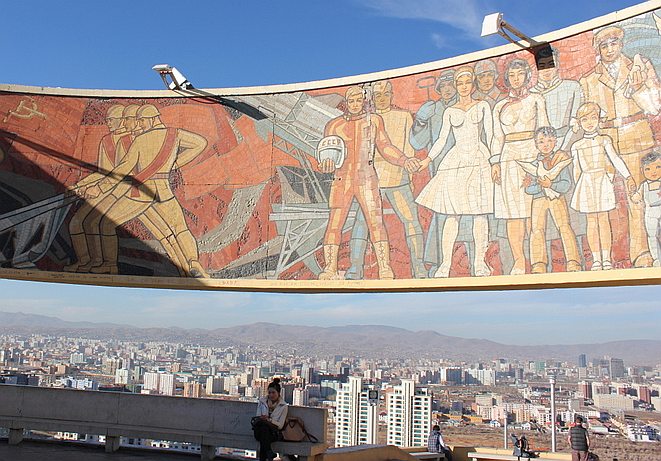
Russian -Mongolian friendship monument on Zaison Hill
More stuff on reunion week later. We have three daughters coming to Mongolia that week so we are acutely interested in all the events and plans being made.


The first marriage workshop. In the middle of all our sickness I did a lot of last minute things to get the posters made and publicity out. The young man I worked with featured Darlene and myself more that I would have liked but it did attract a lot of attention. I was under stress all week trying to get handouts translated.

All ten classes are described in detail

Alimaa – my co-presenter besides Darlene finally talked on Friday before the Saturday event. We divided up the tasks and am I glad we did! We had around 35 – 40 people attend – a lot of young couples in their first 3 years of marriage with no children or one or two at the most. A lot of older members (30s - maybe early 40s - came but it seemed like one of them was representing the couple.


I learned a lot about what lies ahead for me. I came up with a lot of ideas that I will run by Alimaa – you might say I ran into a brick wall called “lost in translation” while Alimaa delighted the group with her energized and humorous teaching style. She also took up most of the time which made my day. 

My blog, after I meet with her, will reveal what I learned and it how my mission will change because of it. Darlene couldn’t attend but none of what I shared surprised her. There are times when blind optimism meets reality.


Fast Sunday and Tsaagan Car. I went to the local ward two blocks from our apartment rather than put my body under stress of trying to do too much in one day. We had an All-Mongolia fast for family history work and half of the testimonies were about Family History work.

A packed chapel
A combined West Stake/UB East District family history fireside was held that evening. The chapel and overflow area was completely filled – over 300 in attendance. They had Family History memory books and records on display before and after the meeting. The fireside was broadcast to all other chapels in Mongolia.

Browsing the displays before the meeting

Orkhon helping with the translation
The program was powerful and designed to help the members use their National Holiday to gather family history and genealogical information during the time set aside for family visits to honor their elderly relatives. 
Special Choir performance in flawless English
I was one of 5 speakers and a special choir performed. This was Darlene’s first time out in three weeks other than follow up appointments to the hospital. 

Signing for the deaf - Sister Farmer is in the picture
President Odgerel gave a powerful concluding talk.


It was a huge success and we had very little to do with it other than my talk. 
President Odgerel is a dynamic speaker

We were definitely out of the loop with all our sickness. If this meeting is any indication, Mongolia is ready to do their part in gathering their records of their ancestors.

The extent of the Mongol Empire - on the wall where we teach English